




Key Metrics
Distributions
Four habits that train your mind to reduce negative thinking, if you're an overthinker. Yale psychologist Susan Nolen-Hoeksema spent decades on rumination and found the trap: replaying a problem feels like solving it, and makes you worse at solving it. The habits: 🧵

Harvard has been following the same group of men since 1938. Eighty-plus years of data on who thrives at 80. The number one predictor was not IQ, income, or fame. 🧵
Two questions that persuade better than any argument. Yale psychologist Michael Pantalon calls them irrational. I first wrote about them in To Sell Is Human, and they still work on everyone, including me. 🧵
Every AI pitch promises the same thing: Do more in less time. Finally get to the important stuff. Work less. New research from Berkeley followed real workers for 8 months. That's not what happened. 👇
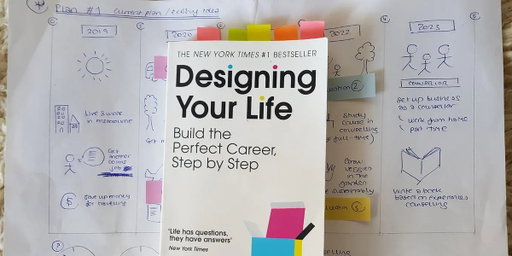
A 20-minute exercise from Stanford that I'd put up against most career coaching. It's called the Odyssey Plan. Three five-year futures, on one page. 🧵
Just sat down with David Epstein (NYT bestselling science writer) to gut-check the "wise" beliefs quietly wrecking careers. The 7 that hit hardest:
How to plan your day (for people in their 50s). I'm 61, so this one's personal: 1. Your body clock has drifted earlier since your 20s. Use it. 2. The midlife slump is real, and it lifts. 3. Say no faster. Your time horizon is the asset. 4. Take your breaks outside, with someone. 5. Quit books at 100 minus your age pages. The science: 🧵
The headlines are relentless. AI seems posed to outthink many of us. So what do humans do? Twenty years after writing A WHOLE NEW MIND about the rise of right-brainers, here’s my initial answer: Double down on six human skills. 🧵👇
The Harvard Study of Adult Development began with 268 sophomores, John F. Kennedy among them, and later added 456 boys from Boston's poorest neighborhoods. Researchers tracked health, careers, marriages, and brains across whole lives. It's still going, now with their children.
George Vaillant directed it for more than 30 years. Asked to sum up eight decades of findings, he did it in five words: "Happiness is love. Full stop."
The current director, Robert Waldinger, put a number on it. How satisfied people were with their relationships at 50 predicted their health at 80 better than their cholesterol did.
Past a threshold, IQ didn't predict a satisfying life. Money didn't either. Warm relationships did, for the Harvard men and the Boston men alike. And loneliness showed up in the bodies: Waldinger calls it as toxic as smoking.
In my own research, across 26,000 regrets from 134 countries, the largest category was connection: the friend you drifted from, the call you didn't make. Mine is on the list. I didn't build enough close ties with friends and mentors when I was younger.
You don’t need 100 productivity hacks. You just need these 6 principles to get better work done . . . and avoid wasting your life.
1. The no-complaining rule. Complaining doesn't solve problems. It rehearses helplessness. Go 24 hours without complaining, out loud or in your head, and notice how much energy comes back.
Tonight you'll have a free hour. Spend it on a person, not a platform. Who's the call you keep postponing?
2. End the "what if" spiral. "What if it goes wrong" is protection mode, and your brain will keep supplying answers for hours. Ask the other one: what if it works out? Same question, wider frame.
The largest study on human happiness revealed something that blew me away. After 80 years of data, the #1 predictor of your health, wealth, and happiness isn’t what you think.
Daniel Pink (@DanielPink) X Stats & Analytics
Daniel Pink (@DanielPink) has 442K X followers with a 0.50% engagement rate over the past 12 months. Across 759 posts, Daniel Pink received 24.0K total likes and 5.09M impressions, averaging 31.7 likes per post. This page tracks Daniel Pink's performance metrics, top content, and engagement trends — updated daily.