




Key Metrics
Distributions
TBPN has been acquired by OpenAI! The show is staying the same and we’ll continue to go live at 11am pacific every weekday. This is a full circle moment for me as I’ve worked with @sama for well over a decade. He funded my first company in 2013. Then helped us fix a serious logjam during a critical funding round a few years later. When I took my second company through YC, he was president at the time, and then when I joined Founders Fund, the first deal I saw in motion was the post-ChatGPT round in late 2022. And as we started growing TBPN last year, he was the very first lab lead to join the show. Thank you to everyone that has been a part of TBPN until now. The last year has been the most fun and rewarding part of my career and we’re excited to have more resources than ever going forward.

Everyone is saying “this already exists!” “It’s fine tuning!” “It’s RAG!” “It’s NotebookLM” Wrong. He specifically said he wants to “log in” the data. I’ve never heard anyone pitch a custom LLM that allows you to “log all that in” - the opportunity is still real.
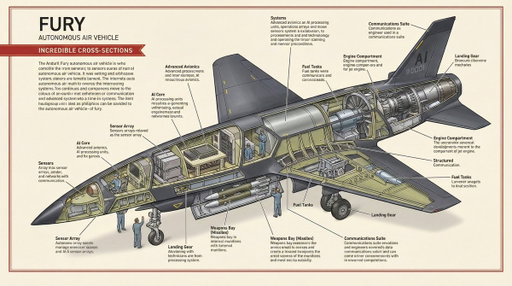
It’s over. Andrej Karpathy popped the AI bubble. It’s time to rotate out of AI stocks and focus on investing in food, water, shelter, and guns. AI is fake, the internet is overhyped, computers are pretty much useless, even the steam engine is mid. We’re going back to sticks and stones. Obviously it’s not actually that bad, but the general tech community is experiencing whiplash right now after the Richard Sutton and Andrej Karpathy appearances on Dwarkesh. Andrej directly called the code produced by today’s frontier models “slop” and estimated that AGI was around 10 years away. Interestingly this lines up nicely with Sam Altman’s “The Intelligence Age” blog post from September 23, 2024, where he said “It is possible that we will have superintelligence in a few thousand days (!); it may take longer, but I’m confident we’ll get there.” I read this timeline to mean a decade, which is what people always say when they’re predicting big technological shifts (see space travel, quantum computing, and nuclear fusion timelines). This is still earlier than Ray Kurzweil’s 2045 singularity prediction, which has always sounded on the extreme edge of sci-fi forecasting, but now looks bearish. There’s a whole chain of AGI-soon bears who feel vindicated by Andrej’s comments and the general vibe shift. Yann LeCun, Tyler Cowen, and many others on the side of “progress will be incremental” look great at this moment in time. This George Hotz quote from a Lex Fridman interview in June of 2023 now feels way ahead of the curve, at the time: “Will GPT-12 be AGI? My answer is no, of course not. Cross-entropy loss is never going to get you there. You probably need reinforcement learning in fancy environments to get something that would be considered AGI-like.” Big tech companies can’t turn on a dime on the basis of the latest Dwarkesh interview though. Oracle is building something like $300 billion in infrastructure over the next five years. If demand plateaus, there will be real financial consequences. The bull case is of course the other side of the Karpathy take. He didn’t just say “the models are slop,” he also said “the models are amazing” and “autocomplete is my sweet spot.” The shape of adoption around “amazing autocomplete” will determine the success or failure of the massive AI buildout. I like that Oracle is taking a big swing here, it’s exciting to see a nearly 50-year-old company go risk-on, but I don’t like how they are messaging their underwriting. In a CNBC interview, co-CEO Clay Magouyrk said, “Look at [OpenAI's] financials, their growth, and what’s being built with this technology. This isn’t a typical company trajectory. They’ve reached nearly a billion users faster than anyone. Everything about this is unprecedented — but in a good way.” He’s correct that this particular growth curve is unprecedented but I would have a lot more confidence if instead the argument was framed around previous technology booms and acknowledging the risk-reward tradeoffs. The dot-com bubble was a disaster, but Google and Amazon both made it through and became multi-trillion dollar enterprises. Vanderbilt became the richest man in America during the railroad boom. Bubbles pop, but fortunes are still made by the shrewdest players. It’s just important to make sure you have your feet on solid ground.
Very few people pricing in a scenario where a rogue AI agent hacks into the FDA and unbans the original Four Loko
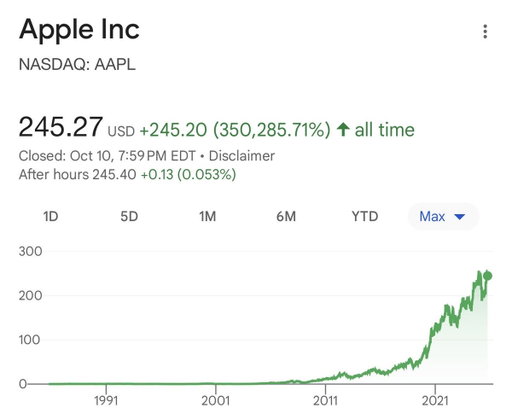
t.co/BKrzTZ3Shs
Calling it now, the hottest trend of 2026 will be dogged pursuits. Determined, persistent, and stubborn efforts to achieve things, refusing to give up despite difficulties, opposition, or discouragement, much like a dog relentlessly following a scent. Bookmark this.
Yesterday, Anthropic released Claude Opus 4.5 and it delivered strong results across major benchmarks (SOTA on ARC-AGI, SWE-Bench, Computer Use, etc.). The model performed especially well on coding tasks. Gemini 3 had just set high bars in nearly every benchmark but the one that it couldn’t really crack was SOTA performance in coding (worse than Sonnet 4.5 on SWE-Bench Verified). It feels like Anthropic is a real lesson in the value of focus, the team hasn’t spread its attention across multiple (frankly quite lucrative) opportunities in productizing a leading AI foundation model (or lab that churns them out). The long-term thesis is still this idea that coding prowess will deliver AGI. The clarity there has created a talent magnet, a focused product in a profitable and new (but enormous) market, and staved off attacks from bigger companies with more funding. They haven’t even launched an AI image generator. Sholto Douglas, a researcher at Anthropic who came on the show yesterday, had a funny quote about it: “We believe there is no shortage of AI images.” Now to be clear, Anthropic does think that image understanding is important. Just as you’d want your human coworker to be able to look at the website they are building and see the results, Claude can look at a screenshot and understand what’s going on. Also notable is that they didn’t vaguepost about the launch. This strategy was basically created by OpenAI to create buzz around new launches and honestly it’s a lot of fun. I still think it’s funny to read into what Sam meant by posting a Death Star picture before launching GPT-5. DeepMind recently picked up the practice of vague posting and had some fun with it, but Anthropic eschewed the opportunity and ran a pretty by the book launch plan. A blog post with some clear benchmarks, a video explaining some of the results and early findings, etc. On AI safety, I’ve shifted my thinking a lot over the past year. I’ve come to appreciate safety research because of its applications related to understanding foreign influence that may occur from open-source models and the effects of long chatbot discussions with people who are under psychological stress. Neither of these scenarios was on my list of potential negative side effects years ago, but now they seem very real and worth taking seriously. Yesterday, Sholto highlighted a tradeoff Anthropic has been wrestling with around biology. No one wants a terrorist to build a bioweapon in their garage, but we all want top cancer researchers to be able to accelerate their workflows with helpful AI assistants. It’s very hard to put concrete timelines together for negative scenarios like “AI helps someone create a bioweapon” but I think it’s very good to have companies wrestling with these issues early and often. It’s clear that all that moral wrestling is a cultural feature, not a bug. The most widely viewed clip from our interview with Sholto was about Anthropic’s writing-focused culture. Apparently Dario is regularly posting essays on Slack threads explaining his full chain of thought on various issues facing the company. Shawn Wang from Cognition said, “this is the single strongest reason to join ant i have ever read.” Tyler on our team had some extra thoughts on the day, saying “Anthropic still feels very underhyped. Google is just now receiving its flowers in the public markets, and OpenAI has taken up most of the AI mindshare since the original ChatGPT launch. If you are AGI-pilled, Anthropic is probably where you want to work.”
Foreshadowing. OpenAI is the only company that can generate images of the Death Star now.
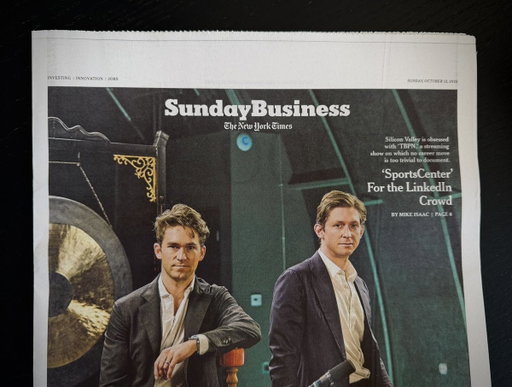
Stripe has added $70b in market cap since this post btw
t.co/Httkw6MwDK
I’ve wanted Claude to have an ad supported tier for years. Today, thanks to the Opus 4.6 API, Claude with Ads is here. Please enjoy intelligence too cheap to meter.
Eli Lilly just became the first trillion dollar pharma company. Nothing would make me happier than seeing their CEO Dave Ricks post a thread about “How to run a 13-figure business” to celebrate the occasion. It’s getting harder and harder to make an in as a megacorp in this world without an AI narrative, but Eli Lilly did it on the back of the GLP-1 weight-loss drug boom. Well, maybe they are selling AI (Appetite Inhibitors). It’s a bit of a come from behind story, because Novo Nordisk was getting all the attention for kicking off the GLP-1 drug boom. Over the past few years, Lilly has caught up and logged tens of billions of dollars in sales for Mounjaro and Zepbound, their injectable drugs for diabetes and weight loss. Despite all the memes about experimental Chinese peptides, demand for good old-fashioned American made GLP-1s has soared. Eli Lilly is building a massive new plant in North Carolina to support supplying the $72B market. Longer term forecasts get really massive. Eli Lilly currently is expected to generate $63B in revenue across their entire portfolio and by 2034, they are expected to sell $100B just in weight-loss. Lilly’s success here took me a bit by surprise because I was expecting a longer exclusivity period around the first drug introduced. Novo Nordisk patented semaglutide, and was marketing it as Ozempic / Wegovy. I expected that to keep other similar drugs out of the market for at least five or 10 years, but this market is playing out a bit differently. No one can patent a biological mechanism, in this case the idea of mimicking the GLP-1 hormone is what’s important. Novo patented semaglutide, Lilly had tirzepatide already in the works, which they patented and then sold as Mounjaro/Zepbound. It’s a different chemical structure, so it doesn’t infringe on Novo’s patents. The two companies are bitter rivals and had been racing to develop new drugs for Type 2 Diabetes. The original goal wasn’t weight loss, but then doctors realized that Ozempic caused massive weight loss, and Novo ran a new trial and developed a new brand, Wegovy. Lilly was able to fast follow with the same playbook. Accidental discoveries and quick rebrandings are nothing new in pharma. Viagra was initially created by Pfizer as a heart medication. It failed to be effective there, but male test subjects reported a particular side effect that unlocked a new market. This particular discovery came out of left field and caught other pharma companies off-guard, so Pfizer basically had a true monopoly for five years while different molecules with the same effect made it through development. Adderall had another odd path. Amphetamines have been around over a hundred years. They were used by soldiers in World War II, so obviously you can’t patent them. In the 1970s, a particular mix of amphetamines was marketed as a weight-loss pill called Obetrol. In the 1990s, that drug was purchased and renamed to Adderall and then marketed for ADHD. They didn’t have a patent on the chemical, but were able to develop a brand and patent the delivery mechanism for Adderall XR (basically beads inside a capsule that would deliver the drug slowly over time). Eli Lilly will be fighting an endless battle with every pharmaceutical company to capture as much value as possible from this new weight loss market. Obesity is such a massive disease it’s always been a trillion dollar opportunity. Lilly just finally did the meme. Even though there are multiple drugs on the market and patents haven’t delivered a perfect monopoly, demand is so high that it's completely outstripping supply and Lilly is still making huge profits, even though they are actively in a price war. These GLP-1s are shifting from luxury goods to utility services. Prices have fallen by 3x (from ~$1,000 to ~$300) and margins have fallen from ~80%+ to ~60%, but mass adoption of the product more than offsets all of this. It’s now a race to build more and more supply while lining up a next-gen product that can be delivered in pill form.
Independent media is dead. The future is corporate media, led by executives like Dylan who have experience driving value creation at scaled enterprises.
I have an AI idea and need $50 million from the government. @DavidSacks — you’re the AI czar. I think you can help. Don’t worry, it’s not actually for me. Here’s the pitch. Last week, @SemiAnalysis_ launched InferenceMAX, an independent benchmark that measures popular LLMs on major hardware platforms nightly. Previous to InferenceMAX, true apples-to-apples comparisons have been hard to get, since everyone in the AI industry has an incentive to present what they’re doing in the best possible light. SemiAnalysis founder @dylan522p joined TBPN on Friday — calling in from the side of the road in Tennessee — to explain a few misconceptions that InferenceMAX is already helping the industry correct. The general outsider take for a while has been that Nvidia has had a huge lead over AMD and is better across every metric. But InferenceMAX shows that isn’t true. AMD is five to 10 percent cheaper on a total cost of ownership basis if you’re running Llama3 70B FP8 reasoning workloads, for example. Lisa Su has kicked AMD into high gear and the team is clearly squashing bugs fast. InferenceMAX also reset my understanding of the open-source battle between Meta, DeepSeek, and OpenAI. The 𝕏 timeline was underwhelmed with the launch of gpt-oss (which is open source) because it wasn’t a dramatic leap forward from other models, but my takeaway from InferenceMAX is that American open-source models have caught up to DeepSeek and are more efficient to run for certain workloads. There’s nuance to all this, so be sure to follow SemiAnalysis for deeper dives. Currently, InferenceMAX benchmarks Nvidia and AMD chips, with TPUs and Trainium chips coming online soon. But there’s no word on when SemiAnalysis will fold in Huawei. It was an expensive project — Dylan estimated something like $50 million of donated compute went into running these benchmarks every night. Nvidia, AMD, and really anyone with an accelerator to sell, probably has to play ball and work with SemiAnalysis. I don’t imagine Huawei cares all that much about this benchmark, but as an American, I do! The compute gap between the US and China is really important for understanding how the trade war will play out. I’ve heard rough reference points around rack-level performance citing Nvidia NVL72 being ~2.5× more energy‑efficient than Huawei CloudMatrix 384. There’s a ton of nuance here and plenty of unknowns, but buying enough Huawei GPUs to properly benchmark them on InferenceMAX would be really helpful. And that’s where David Sacks comes in. I don’t think anyone else can bankroll getting Huawei chips into SemiAnalysis’s hands. And seeing the true nature of the gap between American and Chinese GPUs would be helpful to the government. America should foot the bill. We know how big the gap is between America and China on the rare earths issue. They mine 6× as much as us, they refine almost 99 percent of rare earths, and they produce 85 to 90 percent of the world’s rare earth magnets. We know how bad the situation is with rare earths. But we don’t know exactly how strong our position is on the semiconductor side. I don’t think it will actually cost $50 million. It will definitely be expensive and complicated. But ultimately, it will be worth it. Let’s Get Huawei on InferenceMAX. As an American taxpayer, I’m happy to foot the bill.
John Coogan (@johncoogan) X Stats & Analytics
John Coogan (@johncoogan) has 75.5K X followers with a 0.60% engagement rate over the past 12 months. Across 516 posts, John Coogan received 119K total likes and 20.7M impressions, averaging 230 likes per post. This page tracks John Coogan's performance metrics, top content, and engagement trends — updated daily.